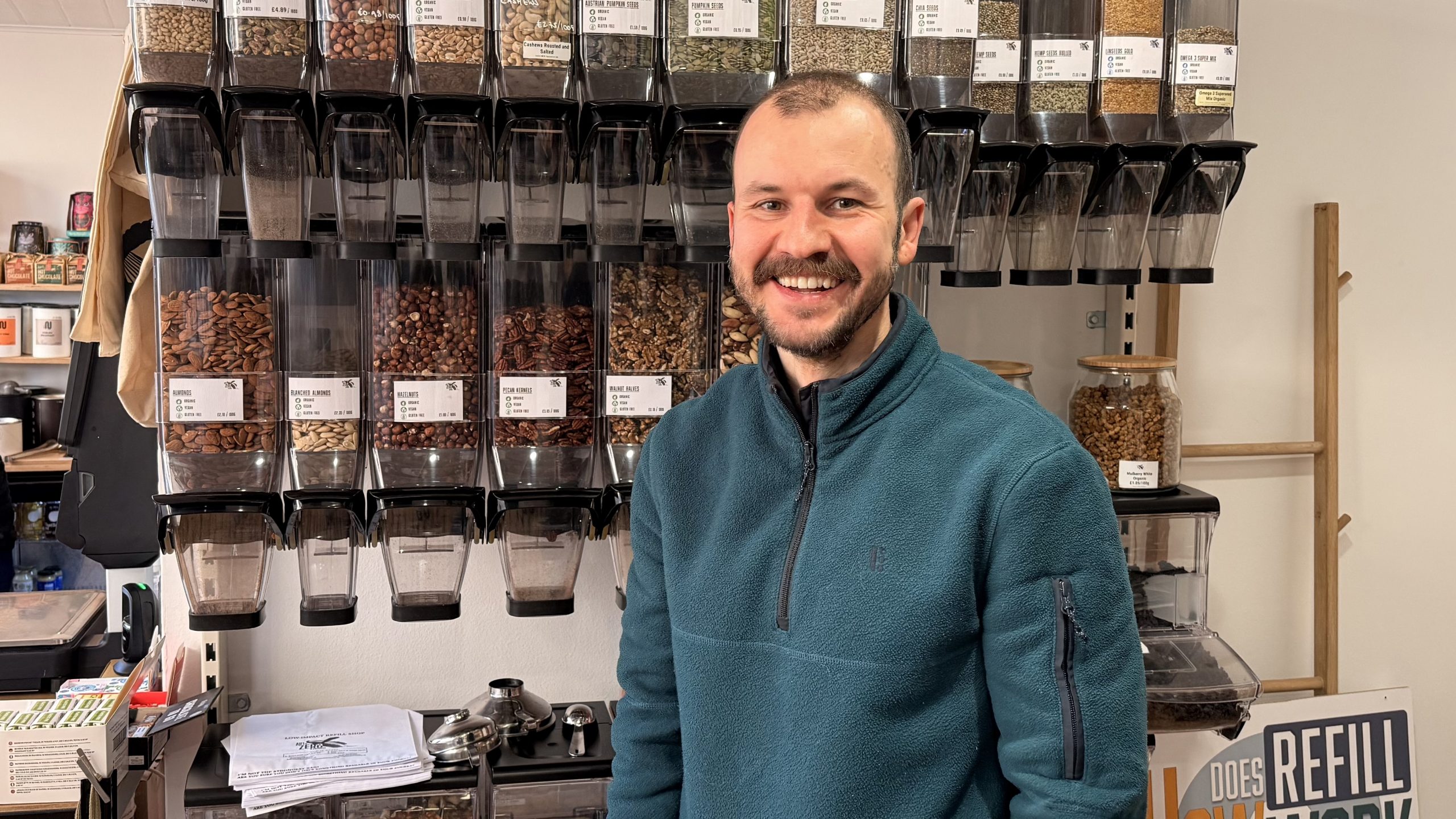
Most busy Londoners get their groceries with a tap of the Deliveroo app. Some dash to the supermarket near the office, reading their ‘to buy’ list on the phone. Shopping must fit around commutes and fast-paced life in a frenetic capital city. But step into Art of Zero Living and everything slows down.
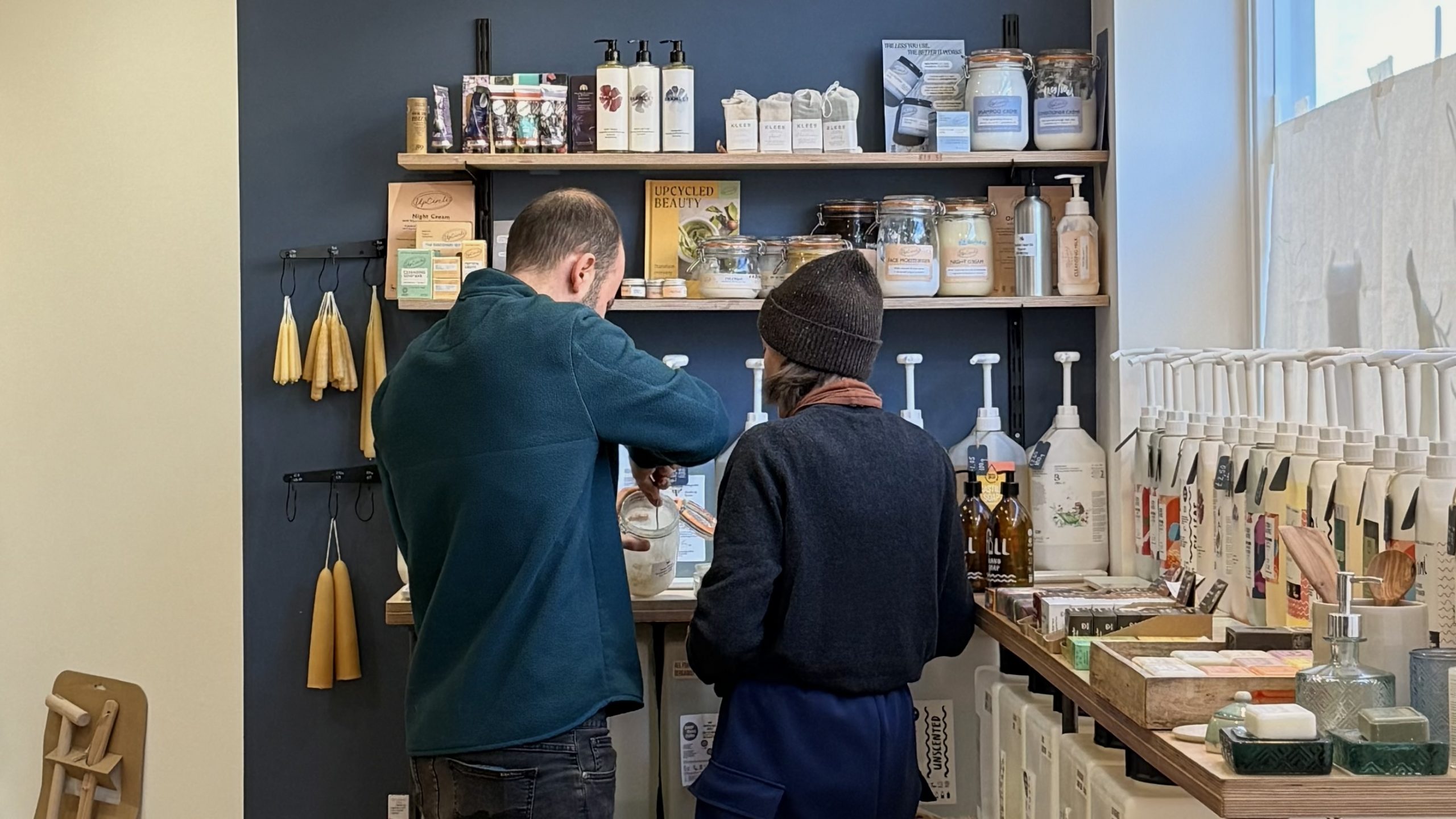
The air smells of handmade soap, glass jars shine softly from the shelves, there is the soft clatter of lentils cascading into a customer’s container. Here, in one of the more crowded parts of Greenwich Market, shopping isn’t a rushed errand but a moment of human connection.
Justas Kanapeckas, one of the store’s founders, tells SouthLondonLines (SLL) it’s meant to be a very different experience to the quick gallop through your average supermarket. “It’s more than shopping, it’s a lifestyle and it’s about human interaction. In Tesco, you just beep, beep, beep and it’s done.”
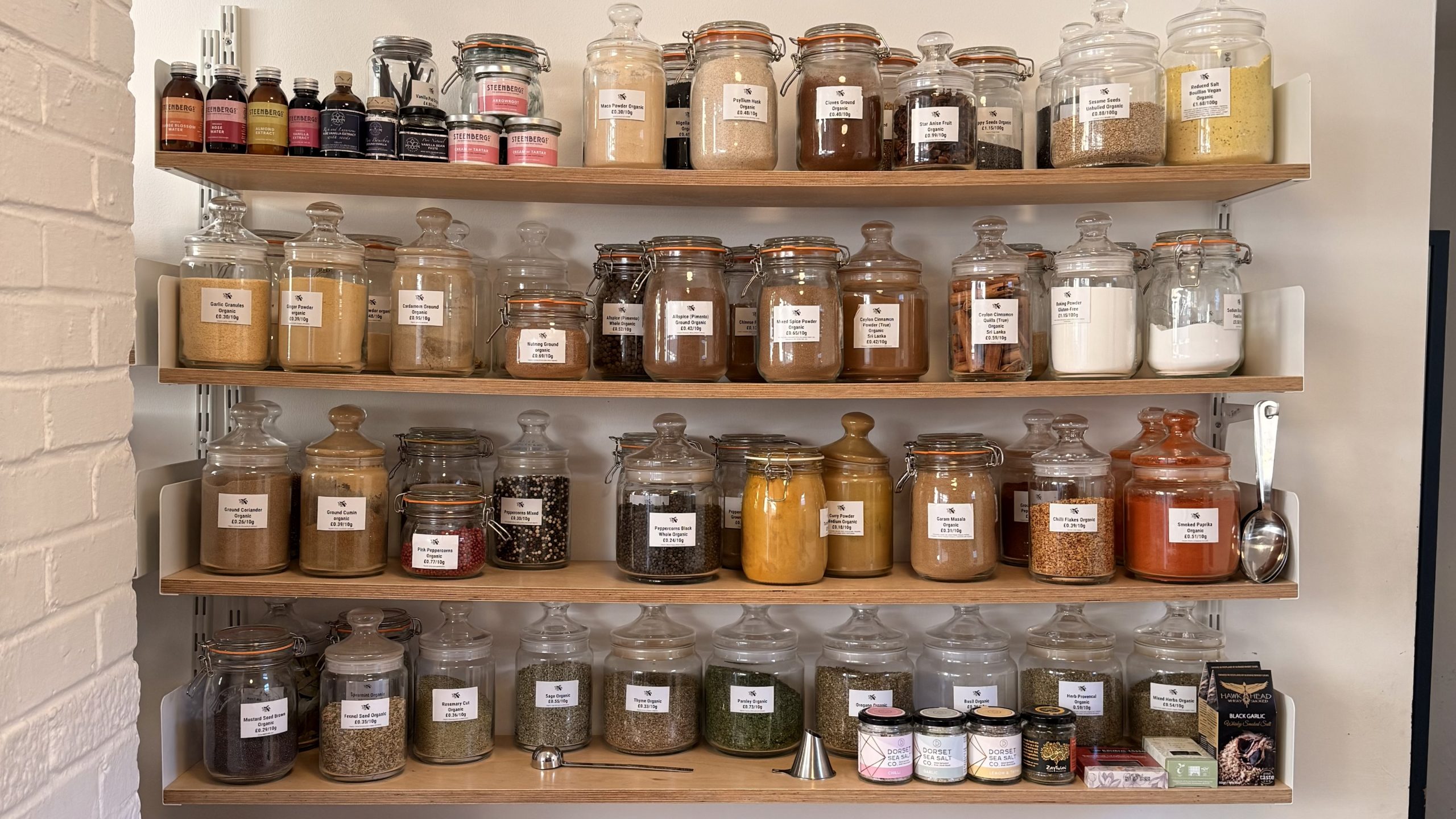
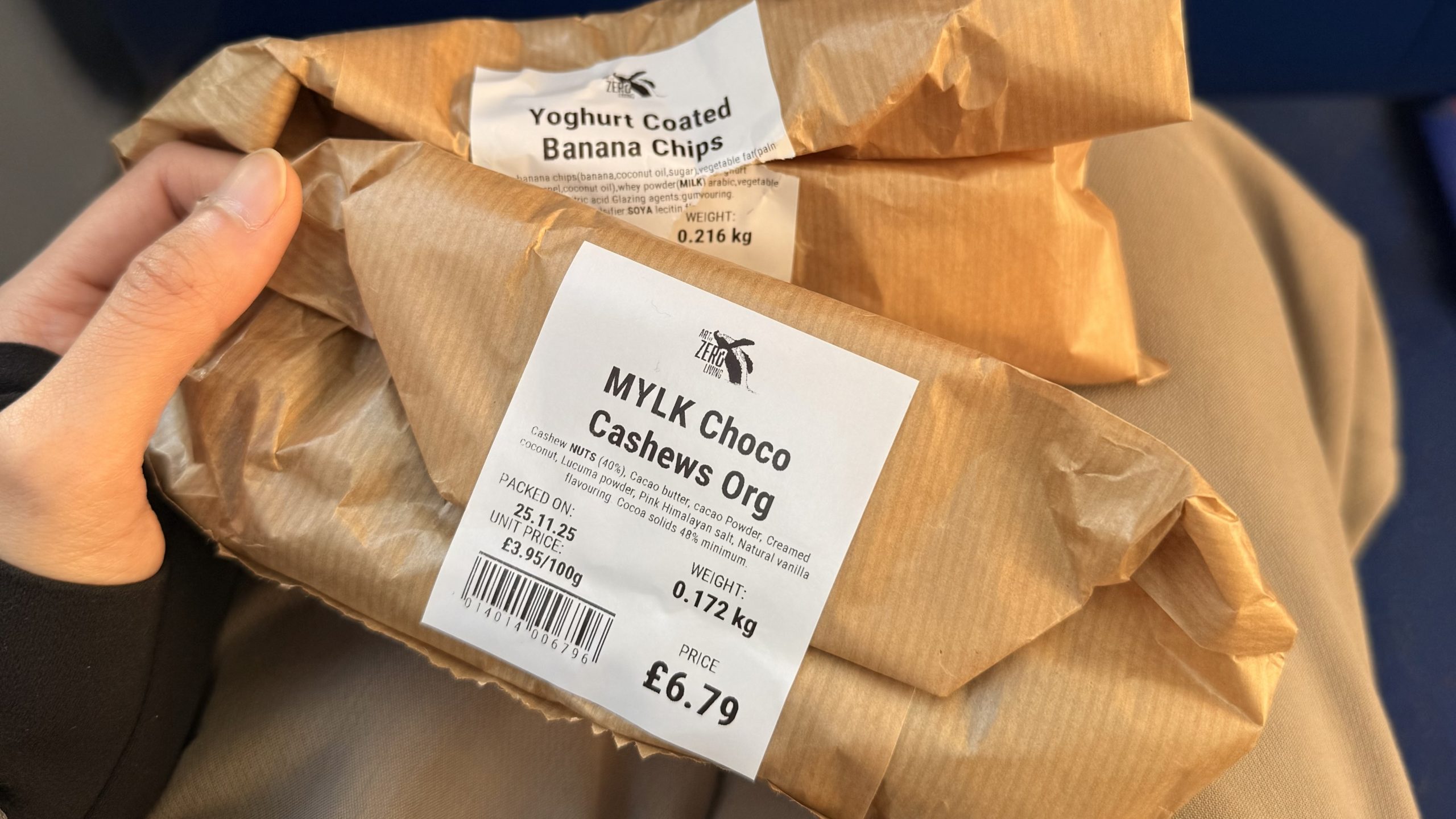
Unusually, customers can buy the exact amount they need, be it one spoon of smoked paprika or a scant half-cup of rice. No need to spend three pounds at the supermarket for something you will use only once or push to the back of the cupboard, says Kanapeckas.
“If 10 customers ask for a product I don’t have, I’ll bring it,” he says, declaring that this is the exact opposite of the way supermarkets shape consumer behaviour by creating trends for customers to follow. “Social media and marketing push people to buy more, more, more…but we encourage the opposite. What do you need? Do you really need it? Better to spend a little more on quality.”
With more than 1,400 products and more being added, Kanapeckas says shopping at a small store actually encourages efficiency in time and money. Many people do not realise how much time they spend wandering around big supermarkets, he says. Research has shown that large stores are designed to keep customers longer and buying more.
“In here, we help people, you can shop in five minutes. They can have their personal assistant like me,” said Kanapeckas. “How much do you need?” he asks, adding that the simple question captures Art of Zero Living’s philosophy of less is more.
Kanapeckas boasts that his short supply chain of small local businesses is available to contact directly and quickly if several customers raise concerns about a particular product.
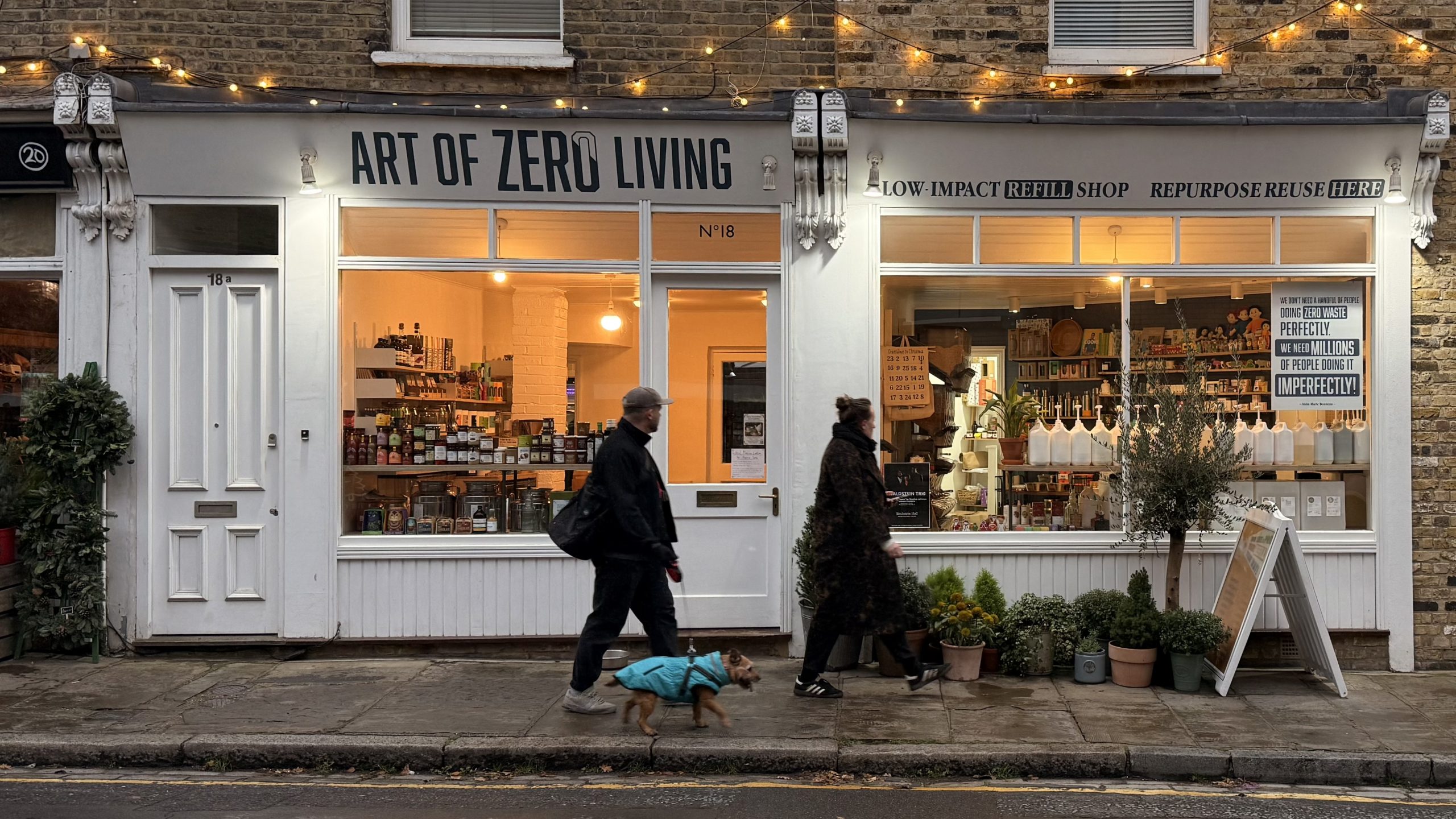
Art of Zero Living has been running almost five years, expanding from one shop in Greenwich Market to a second on Royal Hill. Kanapeckas developed the idea of a store that forges connections with his partner, Vita Visckackaite. It was during Covid lockdowns and “we wanted to be a place for community.”
Around 60 per cent of the customers are regulars. Much of what goes on in the shop feels more like friendly exchanges than commercial transactions. “It’s nice when people care about each other. That’s what small business is about, it’s about taking care of each other. Some elderly customers, I can see they like to come here because someone will talk to them.”
Over the past few years, many zero waste shops in London have closed, mainly because of the cost-of-living crisis and competition from major supermarkets. Kanapeckas agrees that it’s a constant “battle with the big supermarkets” and possibly an unfair one. “People compare our organic rice with Aldi’s rice. First, it’s not organic. Secondly, our prices are cheaper than supermarket organic products,” he says.
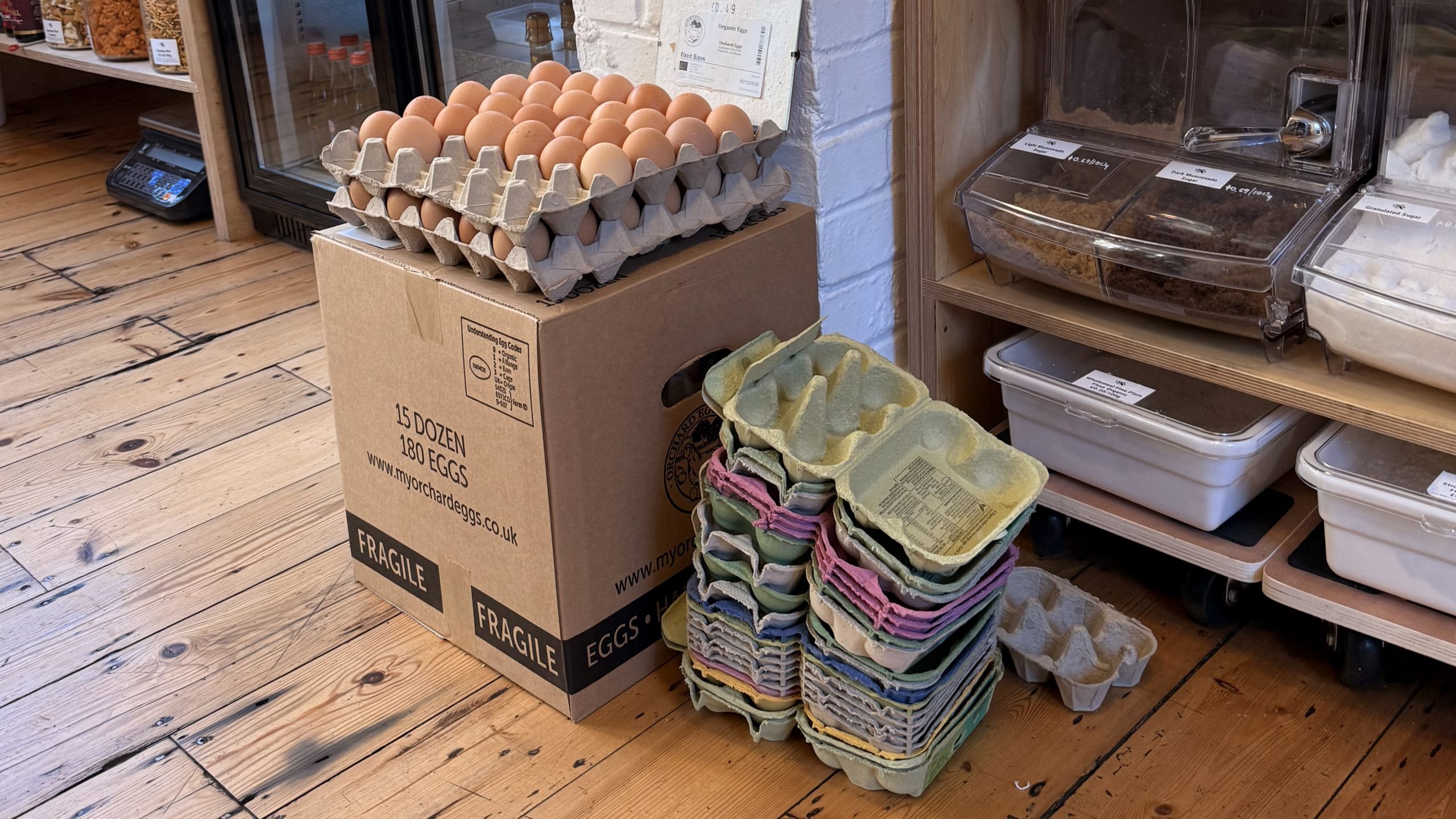
SLL’s quick price comparison showed that Art of Zero Living sells a 100g pack of organic white basmati rice for £0.55 while Aldi’s 280g pack of non-organic basmati is £0.99. Art of Zero Living has six organic eggs for £2.94 while Asda sells them for £2.78.
Kanapeckas says that home delivery apps and supermarket self-checkouts have pros and cons. “Delivery might be quick, but now we have a big issue, which is a lack of social communication and feeling disconnected in real life. Many people are lonely because they hide behind the screens.”
Not so in Art of Zero Living. “When you come to a small retail shop, we talk, we make eye contact. You’re not just interacting with a cold machine,” he says.
Earlier this year, an Office for National Statistics survey showed that up to a quarter of adults in the UK felt lonely “often or always” or “some of the time”. Four in 10 young people aged 16 to 29 years reported feeling lonely “often or always” or “some of the time” compared with around 3 in 10 adults aged 30 to 49 years, 2 in 10 adults aged 50 to 69 years and 2 in 10 adults aged 70 years and over.
Art of Zero Living is a rarity in a city where isolation often hides behind crowded streets.



Good read !